Let’s cut to the chase.
Back in the day, I used to think SEO was about placing and spamming popular keywords in your blog posts and just waiting for Google to pick them up. Wrong. I wasted weeks writing blog posts for an audience that, believe me, did not exist. No views, no prospects, nothing.
That changed when I learned the SEO strategy with the actual components that drive business growth: great content, important and smart decisions on the technical side, and real authority building. It skyrocketed. Pages, prospects, and then some started pouring in.
This guide has everything I wish I knew back then. This is for you if you’re a student learning digital marketing, a business owner that needs more visitors on your site, or a marketer that needs to uplevel your game. Let’s dive into it.
- What Is SEO and Why Should You Care?
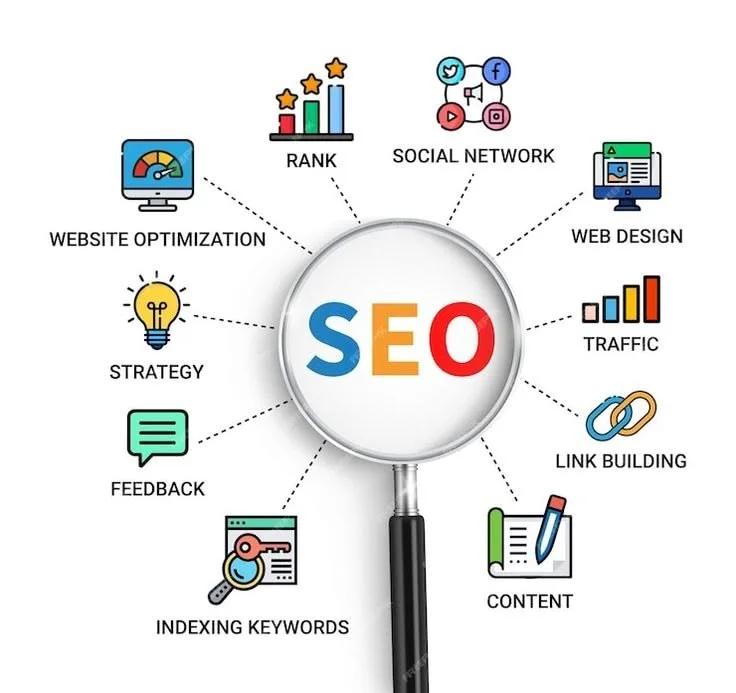
Search Engine Optimization (SEO) is the process of making your site more open to, understandable by, and favourable to search engines recommending to their users topics related to your business. In Google terms, SEO is how you pop up when a user inputs something and clicks search.
Here's why this matters immensely. Google processes over 8.5 billion searches each day. People search for different products, solutions, tutorials, services, and answers. If you don't show up on their website, you are missing out on potential customers.
Paid advertising gives you visibility to new customers until you stop paying for the ads. However, SEO has long term results. If you post a blog that is SEO optimised, it has the potential to garner traffic for years to come. The great thing about organic search is that your business can grow substantially because of it.
- The Three Pillars of SEO You Must Know
Getting a company to show up on Google is a three-part process. If you get all three of these processes correct, Google is very likely to rank your site highly. Out of these three, if you only get one correct, the others are unlikely to succeed as well.
2a. On-Page SEO
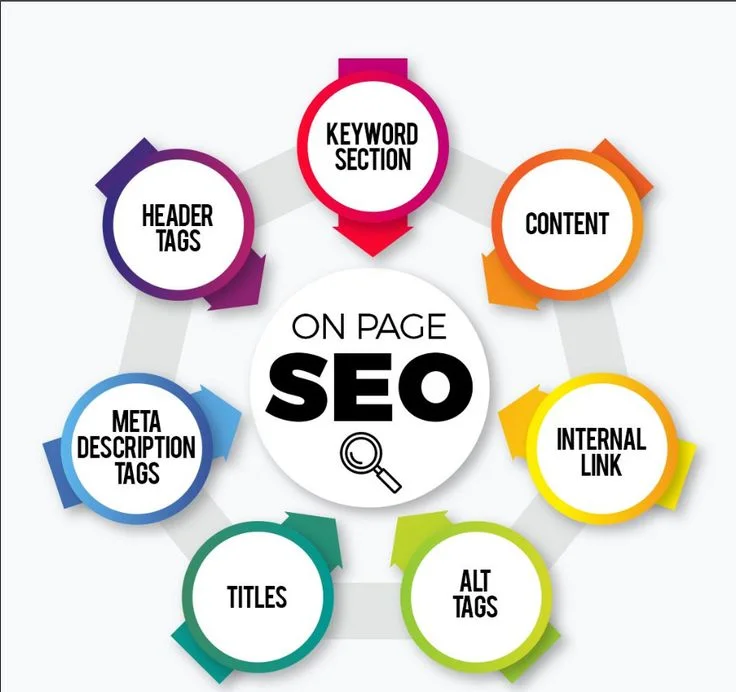
On-Page SEO is SEO that is done through the actual content of the website. This can be everything from the text to the images to the links and meta information. Most people tend to start their SEO journey here and for good reason. It is very quick and easy to get done and provides huge rewards.
- Do content writing that provides a correct solution to your reader's question rather than content that is meant to satisfy an algorithm.
- Your primary keyword should be written in the title, the first paragraph, and a couple of the subheadings. This should be done in a natural way.
- Meta description (≤160 characters) should compel clicks.
- Use headings to organise text.
- Every image should have alt text to help accessibility and SEO.
- Use hyperlinks to help navigation and distribute authority.
2B. Technical SEO
Technical SEO is the solid foundation that makes a house (website) attractive (easy to use, appealing).
- Page speed: Google now considers page speed a ranking factor. A page that loads in under 2 seconds retains users. A page that takes over 5 seconds loses users and suffers in ranking.
- Mobile-first design: Over 60% of the users who view a website do so on a mobile device. A website that does not look good on mobile loses around 60% of its potential users.
- HTTPS security: Google does not trust websites that do not use HTTPS. This leads to a loss of users and poor ranking.
- Clean URL: Cleaner/well-structured URLs like /seo-strategy-guide rank better than /p=12345.
- XML Sitemap & Robots.txt: These files determine what Google crawls and determines the depth of its excursion on your website. These are essential for large websites.
- Fixing crawl errors: A website littered with 404s and broken links frustrates users and wastes your crawl budget. Regular audits are essential.
2c. Off-Page SEO
Developing off-page SEO is determining how to establish your website’s presence with search engines through backlinks (vote of confidence). The more quality backlinks that exist about your website, the more quality Google will determine your website is.
- Guest Blogging: Create quality pieces for popular blogs/websites in your field. Naturally, backlink your website.
- Digital PR: Develop data studies, research or tools that will get cited/backlinked.
- Social Signals: Content that is shared/increases engagement will draw natural backlinks. Therefore, social media engagement will influence backlink rankings.
- Local Citations: If your business is local, your Google Business Profile and Backlinks from JustDial and Sulekha will build domain authority.
- Keyword Research: The Foundation of Every SEO Strategy
If you can't figure out what your audience is searching on Google, you can't create the solution for their search (even if your on-page SEO is great). This is the purpose of keyword research: to determine what your audience is searching.
Use this simple structured approach to keyword research.
- Start with a core topic and identify the 5-10 goals that are most relevant to your business.
- Use Google Keyword Planner, Ahrefs or Ubersuggest to assess the number of people searching for your themes.
- Focus on long-tail keywords. These are phrases that contain three or more words, such as 'how to rank on Google for local businesses in Bengaluru' instead of simply using 'SEO.' Long-tail keywords tend to be easier to rank for and are likely to have a higher conversion rate.
- Identify the intent behind the search. Do they want to buy, learn, or are they searching for a specific website? Your content must satisfy a searcher's intent.
- Look at the current rankers for your targeted keyword. Can you create something actually better? If yes, then go ahead. If no, take a different approach.
- How To Rank On Google: A Realistic, Step-by-Step Guide
We prefer actions over words. Create positive change with our how to rank on Google guide. Here are the best practices that we have found to be most effective:
- Step 1 — Select One Target Keyword Per Page: Each page on your website should target one specific keyword, along with a few relevant keywords that support your primary keyword. If you want to target ten different keywords on one page, Google will get confused.
- Step 2 — Create High-Quality Original Content: Google wants to see that a user’s query has been thoroughly answered. If your content is short, irrelevant, or incorrectly reproduced then you will not see results. Write detailed, relevant content and include original content, insights, and visual aids.
- Step 3 — Focus on On-Page Optimization: Include the primary keyword in the page title, URL, the first 100 words, at least one H2, and the alt text of the image. Write a keyword-rich, persuasive meta description. Include the secondary keywords (on-page SEO tips, technical SEO best practices, etc.) in the body in a relevant way.
- Step 4 — Build Quality Links: Contact bloggers, journalists, and website owners. Ask for guest posting opportunities, offer expert quotes, and/or suggest content collaborations. One link from a website with a good reputation and high authority is worth more than 50 links from low reputation blogs.
- Step 5 — Upgrade Your Page Value: Google’s Core Web Vitals focus on the speed, stability, and interactivity of a page. Use Google PageSpeed Insights and fix the recommended issues. Fast, easy-to-use pages show engagement to Google, and visitors will stay.
- Step 6 — Stay Consistent and Patient: After publication, pages take 3 – 6 months to reach average rankings. The most consistent SEO practices lead to the best results. Publish high quality content, build links, and improve pages.
- SEO for Beginners: The Most Common Errors
Beginner uses of SEO will be better with this section. Knowing these pitfalls will help prevent you from having to experience them yourself.
- Keyword Stuffing: Employing your keyword 30 times in a 500-word article won’t help you — it will only worsen your ranking. Google has advanced algorithms. Write in a way that is friendly to your readers.
- Ignoring Search Intent: If someone searches to ‘buy running shoes online’ you do not make a blog post about it. That would be a running shoes eCommerce page. Understand why the search exists in the first place.
- Neglecting Internal Linking: Each time you publish a new page, refer to it in older pages that relate to your new content. This helps Google learn about it.
- Skipping Meta Tags: Knowing how to code is not a factor here. If you have a CMS that allows you to edit your page settings, do it for every page. They show up in search results and affect your CTR.
- Publishing and Forgetting: If you think that publishing your page is the final step, think again. Outdated pages will drop in rank. Internal links on old pages help direct readers to your content.
- Not Tracking Results: If you do not measure how your pages perform, you cannot learn and improve on it. Implement Google Search Console and Analytics.
The Future of Search
Search was meant to show results for queries. Now that people are getting instant replies to generated AI responses, many have begun talking their queries instead of typing. Learn how to adapt.
This is where Answer Engine Optimization (AEO) comes in. AEO is the technique of rearranging your content, so it is included in voice search results, Google's Featured Snippets, and AI-generated answer boxes, which means users will never click through to a webpage.
Winning in the Age of AI
Here is the most recent and most ignored search optimization tool, Generative Engine Optimization (GEO). With AI tools like ChatGPT, Google's AI Overviews, Microsoft's Copilot, and Gemini, which directly answer search queries, a new game has started, which is identifying how your brand is cited by these AI systems.
GEO focuses on optimising the content to be discovered, trusted, and cited by AI answer engines. Research from Princeton University shows that Generative AI Systems prefer sites that have statistics and quotes from credible sources and that have structured, high-quality content.
Key GEO Strategies for 2026
- E-E-A-T (Experience, Expertise, Authoritativeness, Trustworthiness): Showcased by author bios, cited research, and links to original research. Since users favour authoritative sites, AI will, too.
- Statistics: Exact stats are preferred by AI over generalised statements.
- Expert Quotes: AI loves direct answers and well-structured citations.
- Use Headings and Design Elements to Organise Your Content: Structured content is easy to parse and understand. Make use of H2 and H3 for all major points. Define key terms.
- Write Long-Form, Detailed Content: When generating responses, AI users pull data from extensive sources. An extensive guide consisting of 2,000 words is far superior to a 400-word guide.
- Keep Your Data Accurate and Relevant: AI does a lot of cross-referencing. Your data actually has a better chance of getting cited if it is current and claims are verifiable. Make sure to refresh your content at least bi-annually.
- Content is Still King — Context is Queen
'Content is king' is so common, and yet it rings true in 2025 still. The publishing of content, however, is a bare minimum. The content published must be suitable to the audience, in the correct format, and at the correct time.
Write to the potential audience about real issues. Be the answer to real concerns. What problems or questions do people have that would improve their lives and jobs? There is really no magic to it. Answer real questions. Google will rank your page.
Some content formats are better than others: extensive how-to's, comparison pieces ('A vs B'), and other guides, surveys, and lists of fresh research. Each is valuable to its own search intent and helps build authority in the eyes of Google and trust in your expertise.
- Local SEO - Getting Found In Your City and Neighbourhood
If you're a local business owner - a training institute, restaurant, coaching center, a shop - local SEO is the quickest way to reach the clients you want. Local SEO will find out if your business shows up when people in Bengaluru search for 'AI training near me' or 'robotics courses in Jayanagar.'
- Completely claim and optimize your Google Business Profile. Make sure you fill out your profile with local business keywords, and include your name, address, phone number, open hours, and business photos and descriptions.
- Use keywords with your location in your website content. Instead of 'SEO training,' use 'SEO training in Bengaluru.'
- Collect Google Reviews and respond to them. Reviews are a huge local ranking factor.
- Keep your NAP (Name, Address, Phone) the same across your website, social media profiles, and all your business listings.
- Have different landing pages for the different locations you service.
- Measuring SEO Success: Metrics That Actually Matter
You can't improve what you don't measure. Important metrics to know for tracking your SEO every month are:
- Organic Traffic: How many people came to your website through Google searches? (Google Analytics > Acquisition > Organic Search)
- Keyword Rankings: What are the rankings of the target keywords? You should track the primary keyword (SEO strategy for business growth) and all four secondary keywords every month.
- Click-Through Rate (CTR): How many people who saw your page in the search results clicked on the page? If the CTR is low, you need to improve your title or your meta description.
- Bounce Rate: Are visitors leaving immediately after landing on your page? High bounce rates show you are not delivering on your promise.
- Backlink Profile: How many high-quality sites link to you? Use Google Search Console or Ahrefs to assess.
- Core Web Vitals: These are official scores from Google for page experience. Check them in the Google Search Console under 'Page Experience.'
Frequently Asked Questions (FAQ)
Schema Markup Note: The Q&As below are composed for the implementation of FAQ Schema (JSON-LD). When added on your page, you will qualify for rich results on Google Search.
Q1. How long does SEO take to show results?
SEO takes time, as it should, when done properly. Most sites start seeing the bulk of rankings and traffic increase after 3 to 6 months of consistently implementing SEO. Highly competitive industries or sites with no pre-existing SEO authority may take 9 to 12 months. The biggest ranking hurdles include competition, keyword targeting, the strength of the site's backlink profile, and the quantity and quality of site content. Optimising the site for low-competition long-tail keywords will allow you to gain traction while you optimise for more competitive keywords.
Q2. Can small businesses compete with large companies in SEO?
Definitely. Small businesses often have the upper hand. It is common for large businesses to target broad keywords that have a lot of competition at a national level. Small and local businesses, on the other hand, are more likely to outrank them by focusing on local and long-tail keywords that are less competitive. Indeed, a local coaching center may compete for 'AI robotics course in Jayanagar, Bengaluru’ and win even though it cannot yet compete for 'AI course India.’ By focusing on the local and narrow keywords that are likely to build trust in the community and using reviews and locally based content, small businesses are winning over larger businesses in local search.
Conclusion: SEO Is a Marathon Worth Running
If you are reading this, you most likely have a sound understanding of what SEO is about today. Modern SEO does not revolve around stuffing random keywords anywhere, but is much more complex. It is critical for visibility online.
The best way to achieve growth for your business is to create meaningful content that serves your audience, optimize your business website for speed and accessibility, establish solid and authoritative backlinks, use AEO tactics for voice and featured snippets, and incorporate GEO strategies for a sustainable edge.
You don't just wake up with a successful business one day. The needle moves with every new piece of content, every solved website issue, and every new backlink. Over time, you'll start noticing a clear difference between businesses that consistently paid attention to SEO and businesses that didn't.