Introduction: Meet a Manual Small Business Owner

Stay-at-home business owners often send the same welcome email several times. They spend short breaks entering the same leads over and over. They spend their evenings trying to remember who to call back and when. Outdated manuals create chaos that causes more serious damage to a business than if the business was completely broken. These outdated manuals directly affect sales.
The damage is not only to small businesses. This is a common scenario for most mid-sized businesses. The good news is that marketing automation has improved so much that a small marketing team (or even a sole employee) can run sophisticated campaigns that previously required an entire agency's worth of employees to carry out.
This article explains why marketing automation is necessary for modern business, and describes three of the most ubiquitous options, Hubspot, Zoho, and Mailchimp, and where they fit business use cases.
The Problem: Manual Marketing is a Hard Limit to Growth
Growing businesses face similar dilemmas. Manual processes quickly become untenable as leads and customers multiply. Follow up e-mails go out-of-order or are forgotten. In the absence of lead scoring and prioritization, sales teams ignore leads with the highest potential to convert and instead waste time on leads that are unqualified. Team members begin marketing communications to customers and leads in an ad-hoc fashion with no standard. Fragmentation of data and a lack of standard and cohesive systems means that there is no reliable way of analyzing marketing efforts to measure impact and determine return on investment. Marketing data is trapped in different systems, e-mail clients, and spreadsheets. This is costly.
What Are Marketing Automation Tools?
With Marketing Automation Tools, businesses set a standard and a rule. The software then does the rest automatically, or in an automated fashion. Think of setting a trigger so that customers or leads receive Marketing communication when they meet a certain criterion. Examples are sending welcome e-mails to leads or customers who sign up, sending out different pieces of content to coach leads and customers on, scoring leads based on their engagement, and segmenting lists based on criteria automatically. Marketing Automation Tools help businesses grow by eliminating the manual labor involved in marketing.
These platforms have become far more advanced. Automation tools 2026 will rely on AI, and will integrate sales and marketing data with more sophisticated workflows. Instead of offering rigid, looping workflows, technology will enable more sophisticated real-time responses to customer behavior.
Benefits of Automation in Today’s Market
Automation answers each of the problems mentioned and improves business efficiency without the trade-off of hiring more employees. Automation responds to each lead regardless of employee availability. Automation also helps to consolidate and simplify data, which improves the quality of data-based decisions.
Automation will enable even the smallest business to execute campaigns that, when compared to a conglomerate business’s advertising campaigns, will be sophisticated and marketing a far larger, more advanced, multi-channel approach. The best marketing automation software will change the game.
HubSpot: The All-in-One Growth Platform
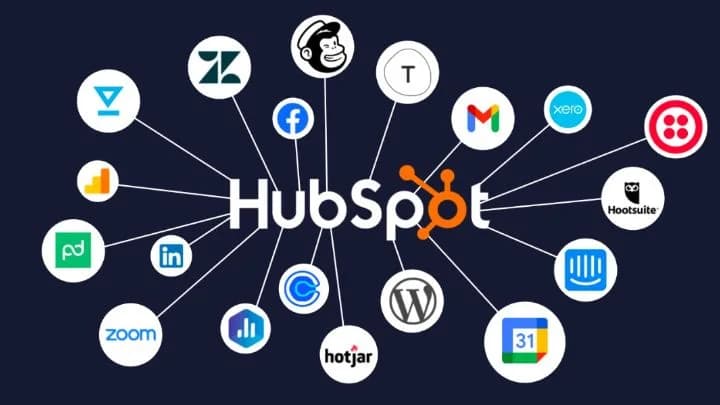
HubSpot has gained recognition for being one of the most exhaustive online marketing automation tools. For small businesses trying to integrate their marketing processes, HubSpot offers a free plan that includes basic contact and CRM solutions, thus permitting many small businesses to begin using the platform.
Among typical use cases are lead nurturing automation, lead scoring, and attribution reporting. HubSpot even offers a builder for automated multi-step processes, the sophisticated nature of which is beyond the need for programming or technical skills. HubSpot’s layers of automation entail a financial trade off, thus most small businesses elect to use the free or low tier plans of HubSpot and cube advanced plans for levels of automation that have proven a return on investment.
Zoho: The Affordable, Highly Customizable Option
Zoho marketing automation is part of an extensive suite of business applications, including CRM, finance, and customer support apps. These integrations are important for small businesses and allows for close integration for all business operations. Zoho is praised for affordability, providing strong features for lower prices when competing against other tools. This is very relevant for small businesses and start-ups.
Automated campaigns are set when changing a deal stage and can easily integrate with the CRM. These campaigns, along with the customizable workflows, are tailored to the sales process. Engagement, purchase history, and demographics are all ways to segment customers in Zoho. This interface can be overwhelming and requires a relatively steep learning curve compared to the competition.
Mailchimp: The Easy Option for Email Automation
The simplicity of the drag-and-drop builder coupled with automation templates, has made Mailchimp a favorite for small businesses when setting up email automation. Mailchimp has evolved from an email tool to a full marketing tool. The simple framework allows for use by individuals that do not have a marketing team.
Welcome email series for new subscribers, abandoned cart reminders, and re-engagement email campaigns are some of the most common examples of marketing automation. Mailchimp provides seamless integration with many ecommerce platforms, and is especially popular with online retailers that want simple, behavior-based automation without a lot of time investment. Compared with HubSpot and Zoho, Mailchimp lacks depth. As ecommerce businesses grow and their automation needs become more complex, Mailchimp’s functionality for things like advanced lead scoring is likely to become a constraint. Most of these businesses eventually switch to a more sophisticated tool.
Best Marketing Automation Software for Ecommerce
Every tool has a different cost and a different level of marketing automation and CRM integration, and every business has a different budget, technical expertise, and complexity of the sales process, so there is really no one best marketing automation tool. HubSpot is likely the best marketing automation tool for ecommerce businesses that need the full integrated CRM and marketing solution at a higher cost. Zoho is likely the best marketing automation tool for ecommerce businesses looking for greater customization and integration at a more accessible price point. Mailchimp is likely the best option in ecommerce focused email marketing for businesses just starting out with their email marketing.
A great way to choose your first business automation is to identify the repetitive time-consuming tasks your team currently struggles with, such as lead follow-up or customer onboarding, and evaluate the specific solutions these automation tools offer in their entry-level offerings or free trial versions. After the initial automation, businesses can continue to grow their automation sophistication and do not need to adopt every automation feature available on the first day.
HubSpot vs. Zoho vs. Mailchimp Snapshot
First, HubSpot has the most comprehensive and integrated solution and, in response, the most expensive. Second, Zoho can be an excellent option where lots of custom functions will be needed, especially since it can integrate with the rest of your business software. Lastly, if your only automation need is email marketing, then the simplest and fastest solution is Mailchimp, but don’t expect a lot of robust sales funnel automation options.
The best function of each of these solutions is to provide a means to get to your goals. The most appropriate way to use these tools is to evaluate which best fits the needs and budget of your current sales process and growth with your business goals.
The Expanding Influence of AI in Marketing Automation
The increasing presence of marketing automation tools integrated with artificial intelligence is one of the characteristics that will define these tools in 2026. Tools are helping marketers optimize their workflows. For example, rather than offering the ability to schedule email blast delivery, tools are suggesting potential email delivery times, subject line suggestions, and message content based on the past interactions of the customer with the service. They are also offering adaptive segmentation based on changing customer behaviors. HubSpot, Zoho, and Mailchimp have all invested in these areas in different ways, and businesses looking to purchase a service should be especially mindful of how much of this technology is included with their subscription to the service vs how much is available only in the paid higher tier or as a paid add-on.
AI can be a marketing automation equalizer for small businesses, countering the advantages larger businesses, with their larger marketing teams, and larger marketing budgets, have had.
Simple Implementation Checklist
Most businesses prospering with automation have followed a similar framework over time. As the first step, look to solve the biggest time-consuming pain point in your marketing operations. This could range from follow up to onboarding to cart recovery. From this task, you can build out the first automated task. Keep this first automated task simple. After a couple of weeks, evaluate the task and the data collected, and increase the complexity. Once you have achieved the results you have expected, you can build out additional automations to tackle more use cases ranging from lead scoring, to reengagement campaigns, to tailored personalization across multiple channels. If you keep this incremental approach across your entire marketing automation, you will yield better long-term results than trying to automate your entire marketing operations at once.
Marketing Automation Mistakes

The most common mistake you will run into is trying to automate too much too quickly. This will make your communications lose a personal touch. Another common mistake is setting automated tasks and failing to evaluate and update these tasks. As a result, long outdated tasks will be running with messages that are no longer relevant. Finally, many businesses will set automation, but will do this without connecting a framework of goals and metrics. It is only by connecting these metrics that you will be able to determine if your automation is a good investment. By avoiding these mistakes, you will be able to set automation that creates a positive impact.
Beyond the Big Three: Alternatives
While the vast majority of small and mid-sized businesses use HubSpot, Zoho and Mailchimp, other options do exist. Mid-level offers such as ActiveCampaign are known for advanced automation, while Marketo and Salesforce Marketing Cloud focus on larger (and more expensive) businesses. For small businesses, HubSpot, Zoho and Mailchimp are such an affordable and feature-rich starting point that they are the obvious options before more advanced systems are considered.
Common Queries
Is marketing automation only beneficial for large businesses?
Not necessarily, the biggest benefits of automation actually go to small businesses because it makes it much easier for a small team to communicate quickly and consistently to their customers.
Which is the best for small businesses: HubSpot, Zoho, or Mailchimp?
That really depends on the business. HubSpot is the best for businesses that want an integrated CRM and marketing system, whereas Zoho marketing automation is great for businesses that want more customization, and Mailchimp automation is best for businesses that want to get started with marketing automation and really focus on email marketing.
When can I expect to see results from marketing automation?
Most businesses that implement marketing automation see faster responses and quicker follow-up to leads within weeks. Refined workflows with performance-based data yield improved results and measurable conversion and sales growth within a matter of months.
Do I need coding skills to use marketing automation tools?
No. HubSpot, Zoho, and Mailchimp offer marketing-focused automation tools that use drag-and-drop interfaces. Minor tweaks and advanced customizations may require a small learning curve.
What is the most concerning factor about marketing automation in 2026?
Over-automation of marketing tasks can result in automated tasks feeling personal and negative consequences can also be seen from a so-called 'set-it-and-forget-it' mentality. Leaving workflows unattended allows messages that are no longer relevant to send automatically.
A REALISTIC EXAMPLE. The Use of Automation to Revive Small Business Health Through Follow-Up
One example is of a small consulting business that received complaints from customers for the inconsistent timing of sending follow up emails. Some customers received their follow up emails days after their initial email. Some received theirs almost immediately. As a simple solution to control the timing of the follow up emails, the consulting business set up a simple automated system that handled incoming emails from customers. The results of the new control system were impressive. The time taken from receiving an email from an inquiring customer to sending them the first email was significantly reduced. The consulting business never had to adjust the content of follow up emails to new customers. The automated system of sending the emails ensured that new customers were communicated with professionally, promptly and with style regardless of how many other consulting jobs the team was involved in. The results described above are some of the most typical results achieved when the use of automation was incorporated into a business, since automation revolves around solving the execution process of a certain task in a business rather than addressing a lack of creativity in the business.
CONCLUSIONS. Automation is Inevitable
As technology becomes more integrated to solve the problem of time delays when customers expect fast communication, businesses that continue to use manual processes to communicate with their customers will fall behind their competition that automate repetitive processes within a business. The goal is to select one of the numerous Marketing Automation soft wares within the market today such as HubSpot, Zoho or MailChimp that optimally reduces friction within your sales and marketing processes and lets your team divert their energies to strategic and creative processes that will build relationships within your target market.
If you want to see how marketing automation can grow your business, Acadvizen can train you in how to choose, implement, and fine-tune the appropriate automation tools for your enterprise. Contact Acadvizen and begin developing the skills to perfect your marketing automation.