Email has been declared "dead" for the last ten years, on a cycle of about once every eighteen months. Now, in 2026, we find email marketing campaigns average a $42 return against every dollar spent. That ROI, and, more importantly, the cost per conversion, outshines all other digital marketing channels.
The real story is email has not died. Bad email marketing has. Campaigns that sent the same generic mass email to tens of thousands of subscribers, just because they were subscribed. Seemingly endless drip campaigns. That style of email marketing has died a long overdue death. Email campaigns that trigger based on customer behavior, and utilize smart segmentation and personalization that is driven by A.I., are thriving like never before.
You will not find a beginner's guide to automation in this blog post. Instead, you will find high-level automation strategies and frameworks that will show you how to generate real profit from your email campaigns. These strategies and frameworks are found in successful email campaigns from some of the best online marketers, and will serve as a guide to help you implement the same strategies and frameworks.
WHY MOST EMAIL CAMPAIGNS DO NOT GENERATE PROFIT (AND HOW TO FIX THE PROBLEMS)
Before we dive into the automation strategies and frameworks, it is helpful to identify the common reasons email automation does not bring profit. The reasons almost always will not pertain to the email marketing platform you chose.
Problem 1: Time Based Vs. Behavior Based Triggers
A classic example of a drip sequence is a welcome email sent after a subscriber's Day 0, a follow-up sent on Day 3, a case study on Day 7, and an offer on Day 14. Such a system sends the same email to subscribers regardless of their actions post subscription. For example, an email user who opened every single email and visited the pricing page multiple times receives the exact same Day 7 case study as an email user who has not opened even one email. This is a massive loss of opportunity.
Drip sequences in 2026 and beyond will be based on behavior and not on the length of time since the last email. In this system, a series of emails is sent after a subscriber takes (or notably does not take) a specific action. If a user clicks a link to learn about pricing, this will trigger a specific email sequence. If a user visits the checkout page and does not complete a purchase, a sequence will be triggered. If a user has not opened an email in 60 days, a re-engagement sequence will be sent. The opportunities and actions of the subscriber will determine the content of the email, and when it will be sent, as opposed to a time based system.
Problem 2: One Segment, One Message
Sending the same automated emails to every subscriber, regardless of how, at what stage in the buying process, or what subscriber level, is the fastest way to drive subscriber engagement to zero. A user who downloaded an entry-level guide and a senior decision maker who requested a one-on-one meeting with your company to discuss the enterprise level offerings will receive the exact same sequence of onboarding emails. The results of these systems will be predictably suboptimal for both groups.
Problem 3: Focusing on Opens Over Revenue
Having a high open rate feels like a win. Seeing a 40% open rate looks great on the dashboard. But if you have a high open rate and low clicks and conversions, you are just focusing on a vanity metric. The sequences that convert the best are the ones that are designed to optimize the click-through rate the most, and are heavily focused on the value of the customer: the amount of pages viewed, the add to cart rate, purchase rate, and customer lifetime value.
THE 6 EMAIL AUTOMATION SEQUENCES THAT DRIVE REVENUE IN 2026
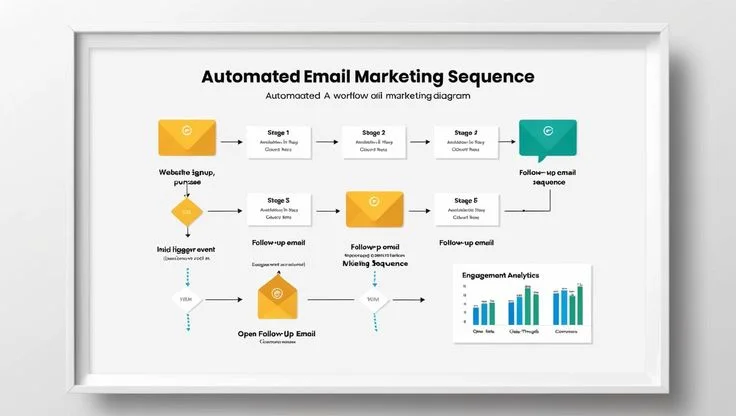
Sequence 1: The High-Converting Welcome Series
The welcome series you build will be the most important automated series you build in your business. New subscribers are your most engaged audience. New subscribers have just gotten through the inbox barrier, which is a big deal in the current email climate. If you just send a generic welcome email, you have blown your best chance to convert.
Here is the sequence that sells in 2026
Step 1: The Instant Gratification Email (Sent Immediately) — Quickly send what you promised, whether that is a freebie, discount, or something else. Say a quick who you are and a bit of what makes you special or different. This email is not meant to be a sales pitch, but to fulfill your promise.
Step 2: The Trust Builder (Sent 24-36 hours later) — This email can give your best social proof, a transformational feedback story, or a story that is a selling insight, but not a sales email.
Step 3: The 'Problem Aware' Email (Sent 48-72 hours later) — After the prospect has an understanding of their problem, make sure your reader knows the core problem that your product or service solves. Use the language that best describes your subscriber's pain. Show your subscriber that you know their pain better than they do and that you know their situation intimately. End with a mild prompt to see how you help.
Step 4: The Offer Email (Sent Day 5-6) — Now you can make your first actual commercial request. Base this around value versus features. A time-sensitive and genuine selling opportunity (many discounts, special offers, and bonuses) should be genuinely urged to your subscribers.
Step 5: The Last Chance Email (Sent Day 7) — Offer subscribers a reminder of the previous email time-sensitive special offer. Keep this vary brief, and motivate your subscribers with fear of offer omission.
Pro Tip: The lead magnet someone downloads or the ad they click can be the basis of an email split. With welcome series' engagement, you can differentiate those who opted in to beginner's content versus those who contacted your brand for a free trial. A simple 5-minute email branch in your automation platform can potentially double rates.
Sequence 2: The Post-Purchase Ascension Sequence
Many companies see automation as complete once the customer buys. This is one of the greatest email marketing mistakes, as loyal customers represent the ideal audience. They know your business and have built rapport and confidence through their purchase experience.
The post-purchase ascension sequence enhances the patron's experience following the initial transaction. It aims to foster loyalty and create a streamlined process for the patron to make more frequent purchases or to purchase higher-value products.
Email 1 This is sent immediately following the purchase. It contains the order confirmation and a personally dedicated message from the founder or team members. There may also be a description of the next steps in the customer’s experience.
Email 2 This is sent 2 to 3 days later after the purchase. It contains onboarding information and/or instructions on how to maximize the value of their purchase. This email should be useful and not be used for promotion.
Email 3 This is sent 5 to 7 days after the purchase. It asks the customer whether they have tried the product and whether they have any questions. This email is relational and provides useful information.
Email 4 This is sent 10 to 14 days after the purchase. It contains a customer success story and suggests the next logical step in the customer’s purchasing journey.
Email 5 This is sent 18 to 21 days after the purchase. This email contains information on the next step product, membership, or a related offer. It is beneficial to the customer and is framed in the context of the previous purchase.
The most effective post-purchase sequences are conversational in nature. These email sequences contain a noticeable degree of tone, timing, and usefulness. The most effective post-purchase email sequences lead to higher customer retention and purchasing rates and are the most subscribed to email sequences. The least effective post-purchase email sequences lead to more unsubscribed emails and less customer purchasing and retaining rates.
Sequence 3: The Abandoned Cart Recovery Sequence
Among the automation options available for eCommerce businesses, abandoned cart emails produce the highest ROI. These emails are sent to people who, as the name suggests, abandoned an item they were about to purchase, and the only thing left to do is figure out what caused them to stop and how we can get them to cross the finish line. If we jump to 2026, a high-performing cart abandonment sequence will, on average, have 3 to 4 emails sent out over a span of 24 to 72 hours. The notable innovation in today’s version of this sequence is the use of dynamic personalization. In this case, dynamic personalization means that the cart abandonment email is showing the exact item the user abandoned, including the images of the product and its variant, as well as a direct link to the exact cart the user left. It is surprising to see how many brands opt to use a generic email that states that the user left an item behind without showing the specific item.
- Email 1 (after 1 hour): The gentle nudge. Low-pressure reminder to the user that they left an item in the cart. Provide the product image and a single CTA for the cart.
- Email 2 (after 24 hours): Address objections. Here you provide answers to the most common objections to the purchase including shipping costs, return policy, product concerns. Provide the most relevant social proof for the product in question.
- Email 3 (after 48-72 hours): Inject urgency if your profit margin allows for a time bound offer to discount that purchase. Otherwise, create urgency around the stock.
Sequence 4: The Win-Back Sequence
Email lists contain graveyard segments, which are made when previously active subscribers become disengaged and start ignoring emails. These segments contain subscribers that have not opened an email in the last 90, 120, or 180 days. Most brands will eventually remove these subscribers, but there are better approaches.
Win-back sequences are effective for list cleaning and sender reputation. In 2026, an effective win-back sequence looks as follows:
Email 1: The honest re-engagement. Tell subscribers that they have been missed and explain the past activities. Provide three of your best win pieces of content that were created or shared while they were inactive.
Email 2: The personal appeal. Acknowledging the inactivity is done in a brief email, which should also ask if the subscriber is still interested. For this segment, a plain-text email that appears to be personal may significantly outperform a designed HTML email.
Email 3: The offer and the ultimatum. If a subscriber is offered a significant incentive for mailing back, then the ultimatum is to unsubscribe them. This will create the urgency that is needed.
Re-engaged subscribers after a win-back sequence become loyal and long-term subscribers. This is because they have made the active decision to come back.
Sequence 5: The Behavioral Engagement Sequence
This is where 2026 marketing automation is most different from what was available even just three years ago. Behavioral Engagement really shows how far email automation has come. Up until now, only enterprise companies with seven-figure budgets on marketing technology had access to integrations like these.
Behavioral engagements sequences are triggered by actions subscribers take on your website, on your app, or on an email. Rather than follow a linear path, subscribers are routed through the various sequences of the automation based on what subscribers are doing.
Here are some common behavioral actions and the sequences that are triggered
- Visited pricing page 2 or more times with no conversion: Trigger high intent nurture sequence that covers common objections and offers the opportunity to either speak with sales or start a trial.
- Downloaded a specific content type (ex: enterprise use cases): Trigger a specific nurture sequence that offers content and case studies aligned to the focus area.
- Has not logged into the product in 14 days: Trigger a platform education and feature focus re-engagement sequence.
- Clicked through to a specific product page multiple times: Trigger a targeted recommendations sequence for that product(s) including Customer Reviews in that Product Category.
Tools that will make this possible in 2026 will include the large players in marketing automation — Klaviyo, HubSpot, ActiveCampaign, Salesforce Marketing Cloud — as well as newer, AI-native tools that will focus on the behavioral email orchestration at scale.
Sequence 6: The VIP and Loyalty Sequence
When thinking about email experiences for top high-value customers, (those customers who make up the top 10 to 20 percent of your revenue), you should be thinking about something totally different from the experience everyone else gets. Many brands are guilty of treating their best customers like new subscribers, and this relationship management error will ultimately drive the best customers to your competitors.
A VIP automation sequence is ideal when a customer reaches a certain spend amount, achieves a certain level of loyalty, or completes a defined number of purchases. This sequence should offer something that is likely more personal, more exclusive, and will help with the next steps for relationship management.
- New products and features made available early to this tier
- Discounts or bundles that are exclusive to this tier
- More personal contact from a senior team member
- More exclusive opportunities and invitations to participation of events and programs
- Personal notes that are made specifically for the tier that are placed with purchase history.
AI-POWERED EMAIL AUTOMATION: WHAT HAS ACTUALLY CHANGED
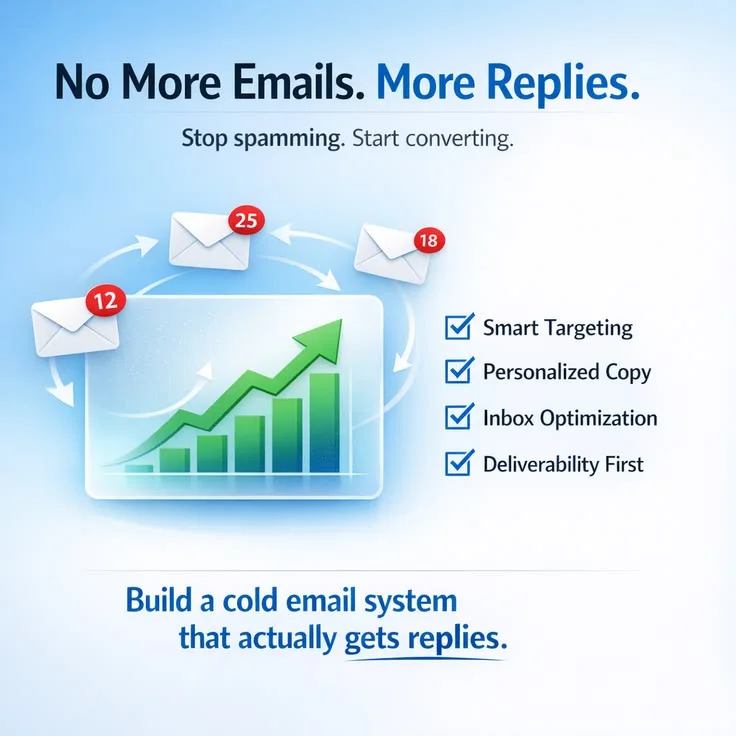
The real change that the use of AI has for your email marketing automation in 2026 is going to be seen for the better. Optimizing your email notifications with attractive subject line offers and copy services will be helpful, but the real change will be seen with the companies that change their entire email infrastructure to accommodate these services.
The Predictive Aspect of Send Time Optimization
AI models have the ability to examine each subscriber's unique behavior patterns. These behavior patterns include things like which days subscribers are most likely to open their emails, which device they use, etc. AI models are then able to send out emails at the most optimal time for each subscriber. Those who have used this technology for email campaigns report that their emails have a 15−30% higher open rate compared to emails that are sent at a standard time.
Dynamic Content Assembly
There are even more advances in the automation of email campaigns. Automation technology has improved to the point where emails no longer need to be the same for each individual recipient. Automation can scan the recipient's behavior data, purchase history, life cycle stage, and demographic information and can select what content block to use for that individual recipient. For a first-time recipient, the email may be very similar to the email that was sent to the five-year recipient. However, the email may contain completely different products, offers, and messages.
Churn Prediction and Intervention
AI models that have been trained on long term subscriber behavior can predict what subscribers are going to become inactive in the next 30-60 days with a great level of accuracy. By predicting subscriber churn, campaigns can be sent to inactive subscribers in a win-back effort. These campaigns are much more effective compared to a win-back effort that is sent 1-3 months after subscriber inactivity.
2026 Benchmark: For brands that have implemented AI to optimize their email send times and to greatly improve the use of dynamic content, behavior based email triggers, etc., those brands are reporting that their email revenue per subscriber is 2.3 to 4.1 times greater than brands that are using a traditional timed email drip campaigns.
THE DELIVERABILITY FOUNDATION: SEQUENCES THAT SELL MUST REACH THE INBOX
All the innovations in marketing automation mean nothing if your email is landing in spam or junk folders. Deliverability, or the ability to repeatedly reach your subscribers' inboxes, is the unsexy cornerstone of every email marketing strategy, and has become even more complicated in 2026.
The deliverability practices every marketing automation technician needs to know and understand are as follows:
- List hygiene: Remove hard bounces immediately, and soft bounces after 3 attempts. Subscribers that have not clicked or opened an email in over 180 days are considered unengaged, and should be formally sunset, through a re-engagement sequence, and if still inactive, should be removed completely.
- Sending reputation management: Monitor and manage your sending reputation. Google Postmaster Tools and MXToolbox are great free resources. A reputation below 80 is a warning. Below 60 is a deliverability crisis.
- Authentication: Ensure your domain is fully authenticated. SPF, DKIM, and DMARC are your trifecta. In 2026, not having all three will mean significant deliverability challenges with Gmail and Outlook.
- Engagement-first sending: New sending sequences should always target your most engaged audience segments, and your volume should be increased gradually.
- Unsubscribe experience: Unsubscribing should be easy. Email marking as a spam report is far more detrimental to your reputation than losing a subscriber.
METRICS THAT MATTER: EMAIL AUTOMATION ROI
The email automation metrics that matter in 2026 will not be the ones most email platforms heavily focus on by default.
What you can stop worrying about
Overall open rate (this is influenced too much by AMPP and bot opens), list size (a lagging and often misinterpreted vanity metric), Email-attributed revenue in last-click (this model hugely over or under attributes based on your business model).
What you should start measuring
- Revenue per email sent (total revenue/total emails delivered) – the best honest metric for commercial email metrics.
- Sequence completion rate – the percentage of subscribers that complete an automation sequence and do not unsubscribe or become inactive.
- Conversion rates at the segment level (which subscriber segments convert at what rate and which sequences).
- List health score (the percentage of actively engaged subscribers). A good health score is if 40% or more subscribers open at least one email in the last 90 days.
- Post purchase email LTV – what is the increase in the post purchase email LTV of customers that receive email automation.
FINAL THOUGHT: FUNNELS VS RELATIONSHIPS
The best email sequences that generate revenue in 2026 will have one key quality that will be almost impossible to measure, but subscribers will recognize immediately: the sequences will feel personalized to the subscriber and written by someone who genuinely cares to help them.
The paradox of high-performance email automation is sophisticated behavioral triggers, segmentation, and dynamic content lead to the perception of personalization, even with the mass sending of emails to thousands of contacts. While this seems like an impossible feat, the technology is unlikely to substitute for a human connection. Instead, it's an opportunity to scale human connection that is typically out of reach.
Design your sequences around this principle: Would an email at a given moment of the user's journey be perceived as an email written for them? Would it be helpful to the recipient at that moment?
If so, email sequences have been created that instill trust beyond email automation, and provide the unique benefits of earning customer trust and loyalty: the priceless and rare marketing outcome of reach, the best compliment of modern marketing: customers actually looking for your emails.
Email automation that is this effective at selling, proves the competitive edge for brands achieving this by 2026. This level of automation is the antidote to competition.
- What is the best email marketing automation sequence for converting leads in 2026?
The most effective email automation sequence in 2026 includes a welcome email, a value-packed educational email, a case study or social proof email, an objection-handling email, and a limited-time call-to-action email. This approach builds trust before making a sales offer, resulting in higher open rates, click-through rates, and conversions.
- How many automated emails should be in a sales sequence?
A high-converting sales sequence typically contains 5–7 emails spread over 10–14 days. The focus should be on providing valuable content, solving customer pain points, sharing success stories, and ending with a compelling offer. Personalization, AI-powered segmentation, and behavior-based triggers are essential for maximizing engagement and sales in 2026.