

The digital marketing industry is evolving faster than ever before, and Artificial Intelligence (AI) is at the center of this transformation. Businesses across the world are now using AI-powered tools and automation technologies to improve customer engagement, increase productivity, and generate better marketing results. From personalized recommendations and intelligent chatbots to automated advertising and predictive analytics, AI is reshaping how brands communicate with customers.
In 2026, AI and automation are no longer just advanced technologies used by large companies. They have become essential tools for businesses of all sizes. Startups, e-commerce brands, educational institutions, healthcare companies, and even small businesses are using AI-driven digital marketing strategies to compete in the fast-changing online marketplace.
As technology continues to advance, marketers who understand AI and automation will have a major advantage in the future digital economy. This blog explains how AI is transforming digital marketing, the latest automation trends, future opportunities, and why businesses must adapt to these technologies to stay competitive.
What is AI in Digital Marketing?
Artificial Intelligence in digital marketing refers to the use of machine learning, data analysis, and smart algorithms to automate marketing activities and improve decision-making. AI systems can analyze customer behavior, understand patterns, predict trends, and optimize campaigns more efficiently than traditional methods.
Automation complements AI by handling repetitive tasks automatically without constant human involvement.
Together, AI and automation help businesses
Save time and operational costs
Deliver personalized customer experiences
Improve targeting accuracy
Increase conversion rates
Analyze customer data quickly
Optimize marketing campaigns in real-time
Modern digital marketing relies heavily on AI because consumers now expect faster, smarter, and more personalized online experiences.
The Rise of AI-Powered Customer Personalization
One of the most important changes AI has brought to digital marketing is advanced personalization. Today’s customers no longer respond well to generic advertisements or mass marketing campaigns. They expect brands to understand their preferences and provide customized experiences.
AI tools collect and analyze data such as
Browsing history
Purchase behavior
Search activity
Social media engagement
Customer interests
Device usage patterns
Based on this information, businesses can create highly personalized
Product recommendations
Email campaigns
Website experiences
Social media ads
Video suggestions
Promotional offers
Popular platforms like Amazon, Netflix, and Spotify already use AI-powered recommendation systems to increase user engagement. For example, Netflix recommends movies based on viewing habits, while Amazon suggests products based on previous purchases.
In the future, AI personalization will become even more advanced with real-time behavioral analysis and emotional AI technologies.
Marketing Automation: Saving Time and Improving Efficiency
Digital marketing involves many repetitive activities that consume time and resources. Marketing automation tools help businesses automate these tasks while maintaining consistent customer communication.
Marketing automation can manage
Email campaigns
Social media posting
Customer follow-ups
Lead nurturing
SMS marketing
CRM updates
Ad campaign management
Analytics reporting
For example, when a customer abandons a shopping cart on an e-commerce website, automation tools can instantly send reminder emails or discount offers.
Businesses benefit from automation because it
Reduces manual work
Improves response speed
Increases productivity
Enhances customer engagement
Improves marketing consistency
Automation allows marketers to focus more on strategy and creativity rather than repetitive operational tasks.
AI Chatbots and Virtual Assistants
Customer support has become one of the most important areas where AI is creating major changes. AI-powered chatbots are now commonly used by businesses to provide instant support on websites, apps, and social media platforms.
These intelligent chatbots can
Answer customer questions
Recommend products
Process bookings
Handle complaints
Provide technical support
Collect customer data
Operate 24/7
Unlike human agents, AI chatbots can manage thousands of conversations simultaneously without delays.
Future chatbot technologies will become more human-like through
Natural language processing (NLP)
Voice recognition
Emotion detection
Multilingual communication
Personalized responses
Businesses using AI chatbots improve customer satisfaction while reducing operational costs significantly.
Predictive Analytics and Data-Driven Marketing
AI is helping marketers move from traditional marketing methods to data-driven decision-making. Predictive analytics allows businesses to forecast customer behavior using historical data and machine learning algorithms.
Predictive analytics helps companies
Identify potential buyers
Predict future sales trends
Improve customer retention
Optimize advertising budgets
Reduce marketing risks
Increase campaign effectiveness
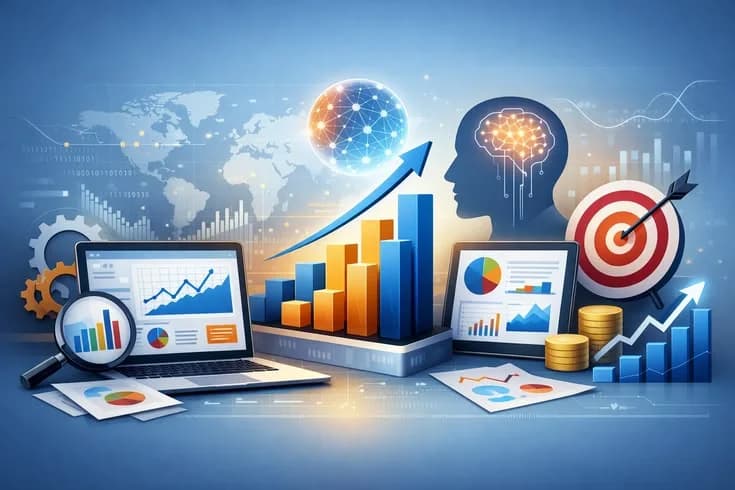
For example, AI can identify which customers are most likely to purchase a product and target them with personalized ads.
Instead of relying on guesswork, marketers now use AI insights to make smarter business decisions based on real-time data analysis.
AI in Content Creation and Content Marketing
Content marketing remains one of the most powerful digital marketing strategies, and AI is changing how content is created and distributed.
AI-powered content tools can help marketers
Generate blog ideas
Write product descriptions
Create social media captions
Produce ad copy
Optimize SEO content
Analyze audience engagement
Suggest trending topics
AI tools are improving productivity by helping businesses create high-quality content faster.
However, human creativity is still essential because AI cannot fully replace emotional storytelling, creativity, and brand identity.
The future of content marketing will involve collaboration between human creators and AI systems to produce more targeted and engaging content.
Voice Search Optimization and Conversational AI
Voice search is becoming increasingly popular with the growth of smart assistants like Alexa, Siri, and Google Assistant. Consumers are now using voice commands to search for products, services, and information online.
This shift is changing SEO and digital marketing strategies.
Businesses now need to optimize for
Conversational keywords
Long-tail search queries
Local SEO searches
Mobile-friendly experiences
Question-based content
For example, instead of typing “best pizza Bangalore,” users may ask, “Where can I find the best pizza near me?”
AI-powered search engines are becoming smarter at understanding user intent and delivering personalized search results.
Voice search optimization will become a major digital marketing strategy in the coming years.
AI in Social Media Marketing
Social media platforms are heavily powered by AI algorithms that determine what users see in their feeds. Businesses are using AI to improve social media marketing performance and audience targeting.
AI tools help marketers
Analyze audience behavior
Schedule content automatically
Track engagement metrics
Predict trending topics
Create targeted ads
Monitor brand reputation
Platforms like Instagram, Facebook, LinkedIn, and TikTok use AI algorithms to personalize content for users based on their interests and activities.
In the future, AI will play an even bigger role in influencer marketing, social listening, and customer sentiment analysis.
Programmatic Advertising and Smart Ad Campaigns
Programmatic advertising is one of the fastest-growing AI applications in digital marketing. This technology uses AI to automatically buy and place advertisements based on audience data and real-time performance.
AI helps advertisers
Target the right audience
Optimize ad budgets
Improve click-through rates
Increase conversions
Analyze campaign performance instantly
Instead of manually managing ads, AI systems automatically adjust
Bidding strategies
Audience targeting
Ad placements
Campaign timing
This makes advertising more efficient and cost-effective.
As AI technology improves, digital advertising will become more personalized and data-driven than ever before.
AI and Email Marketing Automation
Email marketing continues to deliver strong results, and AI is making email campaigns smarter and more effective.
AI email marketing tools can
Personalize email content
Predict best sending times
Segment audiences automatically
Improve subject lines
Analyze open rates
Automate customer journeys
For example, AI can send personalized product recommendations based on customer purchase history.
Automation ensures businesses maintain continuous communication with customers while increasing engagement and conversions.
Ethical Challenges and Data Privacy Concerns
While AI provides many advantages, it also raises important ethical and privacy concerns.
Businesses must ensure
Customer data protection
Transparent AI usage
Ethical automation practices
Compliance with privacy laws
Responsible data collection
Consumers are becoming more aware of data privacy issues, so companies must use AI responsibly to maintain trust and credibility.
The future of AI marketing will require balancing innovation with ethical business practices.
Future Careers in AI Digital Marketing
The demand for AI-skilled digital marketers is increasing rapidly. Companies are looking for professionals who understand both marketing strategies and AI technologies.
Popular future careers include
AI Marketing Specialist
Marketing Automation Manager
SEO and AI Analyst
Data-Driven Marketing Strategist
AI Content Creator
Chatbot Developer
Social Media Automation Expert
Digital Advertising Analyst
Students and professionals who learn AI-based marketing tools will have excellent career opportunities across industries.
Skills Needed for Future AI Marketing Careers
To succeed in AI-driven digital marketing, professionals should learn
SEO and content marketing
Data analytics
AI tools and automation platforms
Social media marketing
Email automation
Prompt engineering
Customer behavior analysis
Digital advertising strategies
Continuous learning will become essential because AI technologies evolve rapidly.
The Future of AI and Automation in Digital Marketing
The future of digital marketing will be heavily influenced by AI innovation. Businesses will increasingly depend on automation, predictive analytics, and intelligent customer engagement systems.
Future trends may include
Hyper-personalized marketing
AI-generated video content
Emotion-based advertising
Advanced voice commerce
AI-powered virtual influencers
Fully automated marketing campaigns
Real-time predictive customer targeting
AI will continue improving marketing efficiency, but human creativity, strategic thinking, and emotional intelligence will still remain valuable.
Businesses that successfully combine human creativity with AI technology will dominate the future digital marketplace.
Conclusion
AI and automation are transforming digital marketing faster than ever before. From personalized customer experiences and predictive analytics to chatbots, smart advertising, and content automation, AI is reshaping the way businesses interact with consumers.
In 2026 and beyond, companies that adopt AI-driven marketing strategies will gain a major competitive advantage. At the same time, professionals who develop AI and automation skills will have excellent career opportunities in the growing digital economy.
The future of digital marketing is intelligent, automated, data-driven, and highly personalized. Businesses and marketers who adapt to these changes today will be better prepared for tomorrow’s technology-powered world.